Request a demo specialized to your need.
ICH E6(R3), endorsed in January 2025, integrates lessons from decades of clinical research experience and responds to innovations such as decentralised clinical trials, digital health technologies, and data-driven oversight models using a risk-based approach.
But here is what the regulatory summary doesn't tell you the operational reality for most sponsor teams hasn't caught up yet.
Most sponsors today are running their clinical portfolio across four, five, sometimes six disconnected systems. CTMS in one place. eTMF in another. Safety data somewhere else. Financial tracking in a spreadsheet. And when a regulator, a CRO, or senior leadership asks for a consolidated view of trial performance someone has to extract reports from each system, reconcile the data, analyse the gaps, and then only then act on what they find.
By the time action is taken, the window to intervene has often already closed.
ICH E6(R3) doesn't just raise the bar on documentation. It fundamentally changes what sponsor oversight is expected to look like and disconnected systems can no longer support that expectation.
What ICH E6(R3) Actually Requires From Sponsors
The language in E6(R3) is clear and unambiguous.
While sponsors may delegate activities to contract research organisations and service providers, ultimate responsibility for trial conduct remains with the sponsor. Clear agreements and robust oversight are essential.
This is not a passive responsibility. Regulators now expect sponsors to maintain effective, risk-based oversight of trial conduct including activities delegated to CROs, vendors, and sites redefining the role of the sponsor from a passive recipient of documentation to an active steward of trial quality.
Three specific requirements stand out for clinical operations teams:
1. Continuous oversight not end-of-trial documentation
Sponsors need to prove continuous oversight throughout the trial, not only when it ends, and ensure records are accessible at any point. That means real-time visibility into site performance, protocol deviations, and data quality — not a quarterly report assembled from multiple systems.
2. Direct access to essential records across all formats and locations
R3 mandates that sponsors and investigators have direct access to all essential records, regardless of format or location. Sponsors must be able to trace their end-to-end data lineage. If your TMF, EDC data, and safety records sit in separate systems, demonstrating that lineage becomes a manual exercise every time an auditor asks.
3. Quality embedded from the start not inspected in after the fact
Sponsors are expected to identify Critical-to-Quality factors early and design processes around what truly influences safety and data reliability. Oversight now means active engagement and documented decision-making, not passive reporting.
The Real Problem: Extract, Analyse, Evaluate, Then Act
Here is what sponsor oversight actually looks like today for most teams — and why it's broken.
A Clinical Operations Director needs to understand how a trial is performing across 12 sites in three countries. Here is what happens:
- Pull enrollment data from CTMS
- Extract deviation reports from the monitoring system
- Download safety summaries from the safety database
- Cross-reference TMF completeness from the eTMF tool
- Compile everything into a PowerPoint for the governance meeting
That process takes days. By the time the leadership team reviews it, the data is already stale. Decisions are made on yesterday's picture of a problem that has been compounding since last week.
This is not an oversight failure. It is a systems failure.
And under ICH E6(R3), it is also a compliance risk — because the TMF is no longer just an archive. It is the tangible record of how sponsor oversight and quality management were exercised in practice. If your oversight process depends on manual report extraction, that record will never be clean enough to withstand scrutiny.
What a Unified Platform Changes
A unified eClinical platform doesn't just consolidate tools. It fundamentally changes where in the process oversight happens from reactive to real-time.
When CTMS, EDC, eTMF, Safety, and Payments sit on one platform, the extract-analyse-evaluate-act cycle collapses into a single, continuous view. Deviations are flagged as they happen. TMF completeness is visible at any point. Safety signals surface in real time. Budget burn is tracked against milestones automatically. Leadership sees the same data the operations team sees without anyone assembling a report.
That is what E6(R3) means by continuous oversight. Not more reports. Fewer systems standing between a sponsor and the information they need to act.
How Cloudbyz Delivers This
Cloudbyz is a unified, Salesforce-native eClinical platform — CTMS, EDC, eTMF, Safety, and Payments on one system — purpose-built for the oversight expectations E6(R3) now requires.
| Oversight requirement | How Cloudbyz delivers it |
|---|---|
| Continuous trial visibility | Real-time dashboards across enrollment, site performance, protocol deviations, and TMF completeness one view, always current |
| Direct access to essential records | CTMS, eTMF, EDC, and Safety on one platform end to end data lineage traceable without manual extraction |
| AI eTMF Agent | Automated document classification, metadata tagging, and completeness tracking TMF inspection-ready continuously, not assembled pre-audit |
| Risk-based oversight | Deviation flagging, RBQM dashboards, and site performance prediction built in oversight is proportionate and documented |
| Portfolio-wide visibility | Multiple studies, multiple programs one consolidated view for sponsor leadership without stitching reports together |
| Audit-ready by design | 21 CFR Part 11 and EU Annex 11 compliant, electronic signatures, and full audit trails validated out of the box |
The Portfolio Problem Nobody Talks About
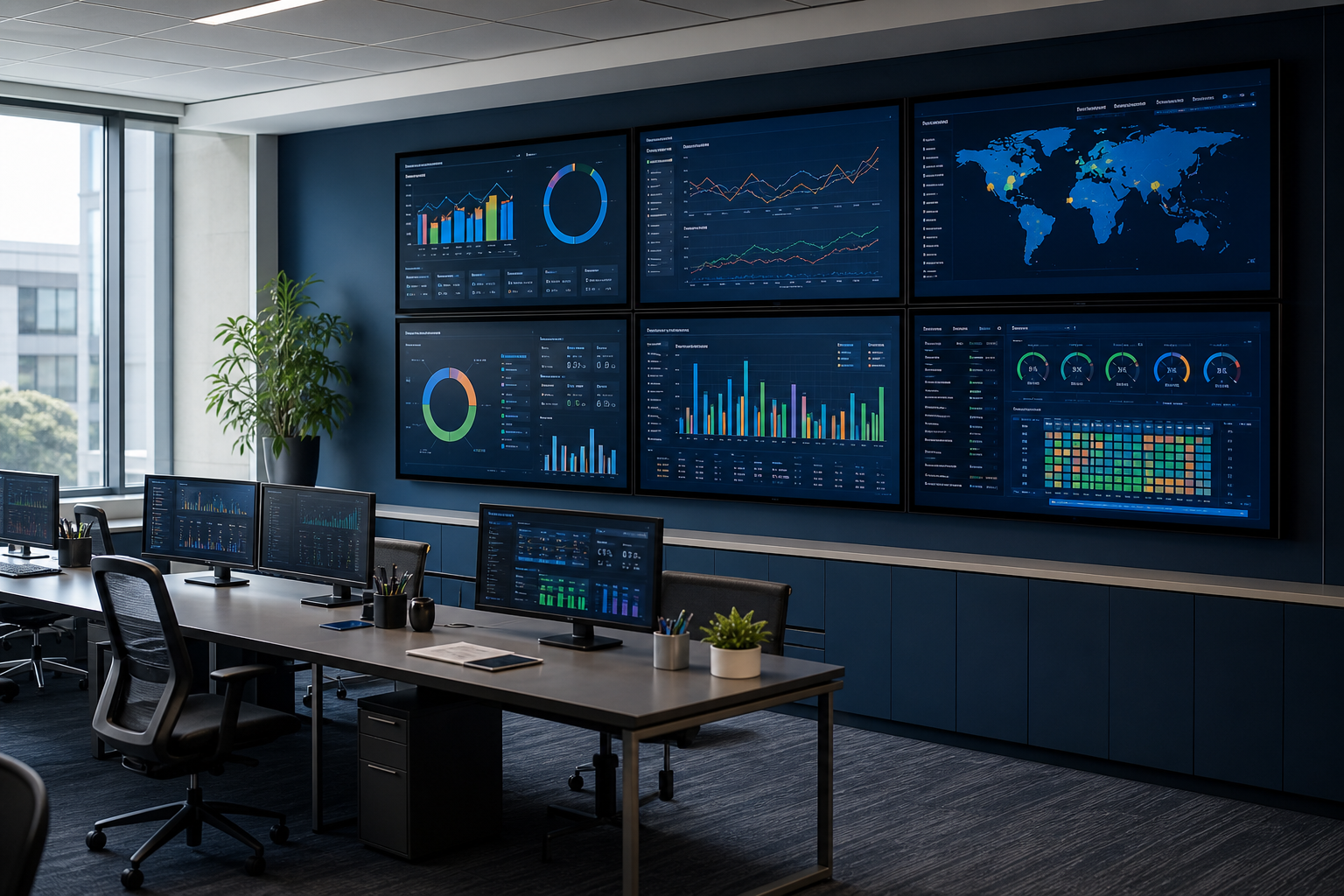
For sponsors running multiple programs simultaneously, the disconnected systems problem multiplies with every new trial.
Each new study means a new instance of the same fragmented infrastructure another CTMS configuration, another eTMF setup, another safety database. And when leadership asks for a portfolio level view of where every program stands, someone has to manually aggregate data across all of them.
A unified platform solves this at the portfolio level, not just the study level. One system across your entire pipeline means sponsor oversight scales with your portfolio — without adding headcount or rebuilding infrastructure program by program.
Conclusion
ICH E6(R3) didn't create a new standard for sponsor oversight. It formalised what best-in-class sponsors have always known that oversight is only meaningful when it is continuous, documented, and acted upon in real time.
Sponsors who already use RBQM platforms are well-positioned for E6(R3) very little conceptual change is required, only process clarity and governance.
The question every sponsor should be asking right now is not whether their processes meet E6(R3). It is whether their systems can support those processes at the pace regulators now expect.
A unified eClinical platform is not a technology upgrade. Under E6(R3), it is an oversight strategy. Cloudbyz is a unified, Salesforce-native eClinical platform trusted by life sciences organisations globally. To see how Cloudbyz supports sponsor oversight across your full trial portfolio, please book a demo.
Subscribe to our Newsletter
