

Request a demo specialized to your need.

Design a portal that makes site payments fast, visible, and audit-ready.
Transparency as a Control System: Why Site Visibility Determines Speed, Trust, and Compliance
In clinical research, trust is not abstract. It is earned through speed, accuracy, and transparency. When sites cannot see what has been approved, what is on hold, or when funds will arrive, the consequences are predictable: enrollment slows, disputes escalate, and timelines slip. The friction does not stem from bad intent—it stems from asymmetry of information.
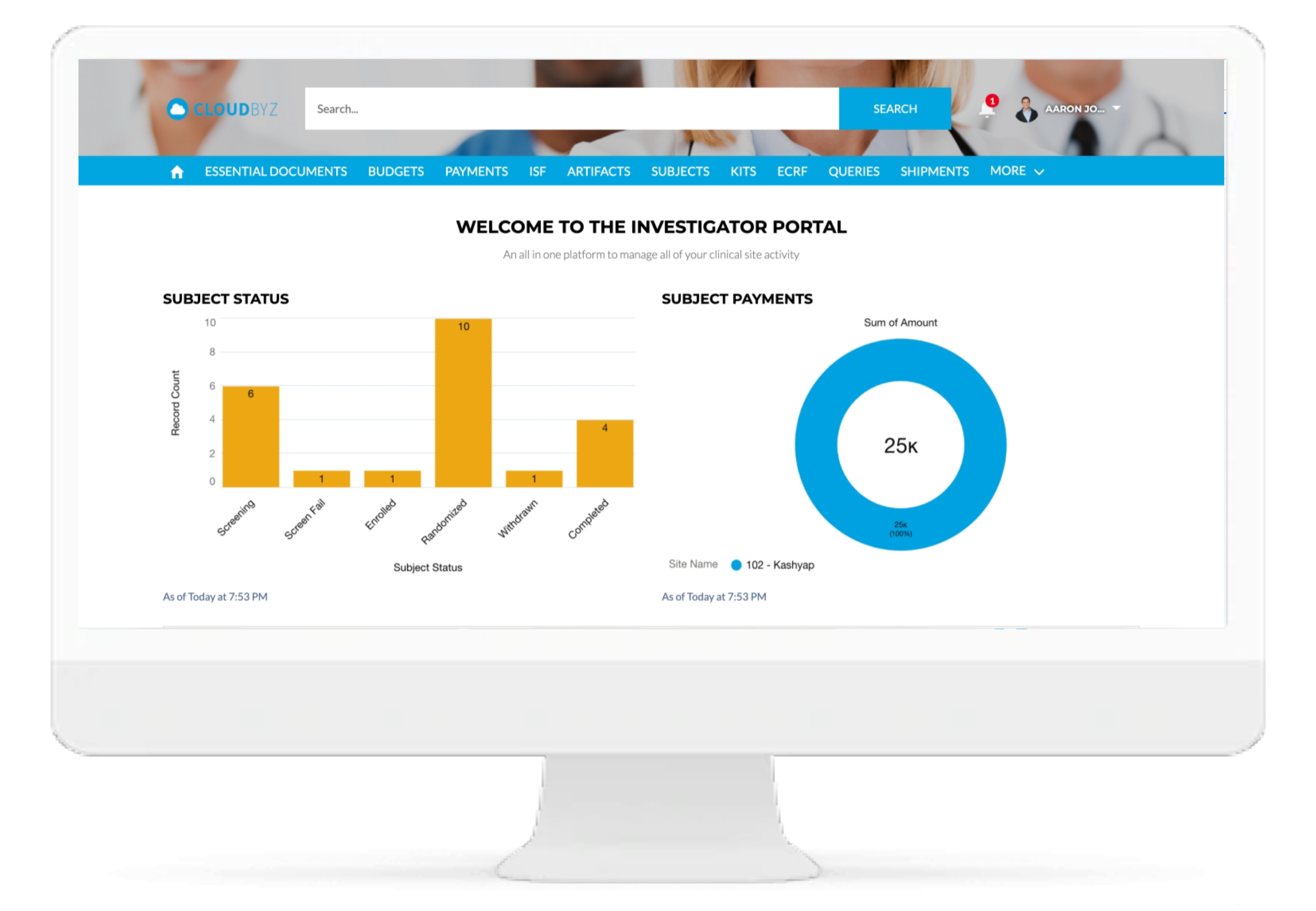
A modern site payment portal resets this dynamic. By giving investigators and site finance teams the same real-time view sponsors and CROs use, transparency becomes operational. Pre-validated payables tied to verified operational events, explicit exception reasons, and expected disbursement dates replace guesswork with clarity. Just as importantly, the portal creates an inspection-grade evidence trail by default, rather than during frantic pre-audit scrambles.
Starting from First Principles: Traceability Over Transactions
True transparency begins with traceability. Every line item a site sees should map cleanly to two things: a contract term and a verifiable operational trigger. Visit payments should reference confirmed completions in CTMS or EDC. Milestone fees should link to prerequisites satisfied in CTMS and finalized documents in eTMF. Pass-throughs must attach to accepted evidence with clear standards.
The portal should not merely display amounts; it should explain them. Each payable should show the governing rule (rate card and modifiers), the linked evidence, and the approver’s attribution. This context turns questions into confirmations.
Participant-facing payments demand particular care highlighting. Reimbursements for documented out-of-pocket expenses must be clearly distinguished from stipends or compensation for time and burden, which may carry tax implications depending on jurisdiction. Policies and portal language should align with IRB/EC-approved materials and authoritative guidance, such as the research subject payment perspectives from the U.S. Food and Drug Administration. On the systems side, expectations for validated computerized systems and durable audit trails are reinforced by guidance from the European Medicines Agency.
Transparency also depends on communication discipline. Publishing precise hold reasons—missing receipts, invalid IBAN or SWIFT codes, out-of-scope line items—paired with fix-lists that spell out exactly how to resolve issues, prevents churn. Sharing predictable reconciliation cadences and service-level targets sets expectations and reduces escalation. From the site perspective, disciplined invoicing and documentation practices are critical, a point underscored by guidance from the Association of Clinical Research Professionals.
Designing the Right Features, Data Model, and Workflows
A site portal must be designed as a product, not a report. Core capabilities should include clear status by line item—planned, candidate, under review, approved, scheduled, paid—alongside evidence links, governing contract references, exception playbooks, currency and FX details, and withholding information. Role-based views allow principal investigators, site administrators, and finance teams to see what matters most to them. Download-ready remittance advice and a secure message center for document requests and clarifications close the loop.
Country-aware banking validation reduces avoidable friction. Incorporating IBAN and BIC checks where applicable lowers reject rates and shortens payment cycles. Open standards and identifiers maintained by bodies such as the European Payments Council provide a useful reference point.
Under the hood, the data model must make matching obvious and reproducible. Stable identifiers for studies, sites, subjects, visits, milestones, and documents ensure records align across systems. Effective-date metadata for rate cards and plan changes preserves historical explainability. Implementing three-way matching—contract terms, operational evidence, and invoice lines—allows reviewers to see context, not just numbers.
Self-service capabilities further reinforce transparency: secure banking updates with validation, tax form refreshes, document uploads tied directly to line items, and controlled contact changes. For clarity on what sites commonly consider invoiceable and which evidence types are expected, quick references from the Society for Clinical Research Sites offer practical grounding.
Operationally, resilience and control matter. Separating transport from business logic, using queues and idempotent processing, and assigning correlation IDs ensure acknowledgments and confirmations reconcile quickly. Segregation of duties is essential: routine items can auto-approve within thresholds when evidence is complete, while exceptions and high-value items require dual approval and documented reason codes. These mechanics keep cycle times short while preserving governance.
Governance, Metrics, and Sustained Adoption Across Studies
Transparency only compounds value when it is sustained through governance. Leading organizations track metrics that reflect both efficiency and control: cycle time from operational event to disbursement, first-pass match rate, exception aging by root cause, and audit-trail completeness. Portfolio and study-level views allow sponsors, CROs, and sites to identify bottlenecks and resolve them collaboratively.
Metrics should tie directly to service-level targets and be reviewed on a fixed cadence by cross-functional stakeholders. An inspection-ready evidence narrative—linking SOPs, validation summaries, configuration exports, change logs, sample transaction trails, and training records—ensures readiness without heroics. Aligning portal controls with modern risk-based quality principles reinforces compliance objectives; shared terminology in International Council for Harmonisation guidance supports proportional oversight focused on what is critical to quality.
The final step is closing the loop with sites themselves. Quarterly retrospectives surface pain points, clarify evidence expectations, and refine playbooks. Over time, transparency stops being a feature and becomes muscle memory.
When transparency is productized—paired with country-aware controls and audit-ready records—payments move faster, disputes shrink, and trust compounds across the site network. In a clinical landscape defined by speed and scrutiny, visibility is not just good practice; it is a competitive advantage.
Subscribe to our Newsletter
