

Request a demo specialized to your need.
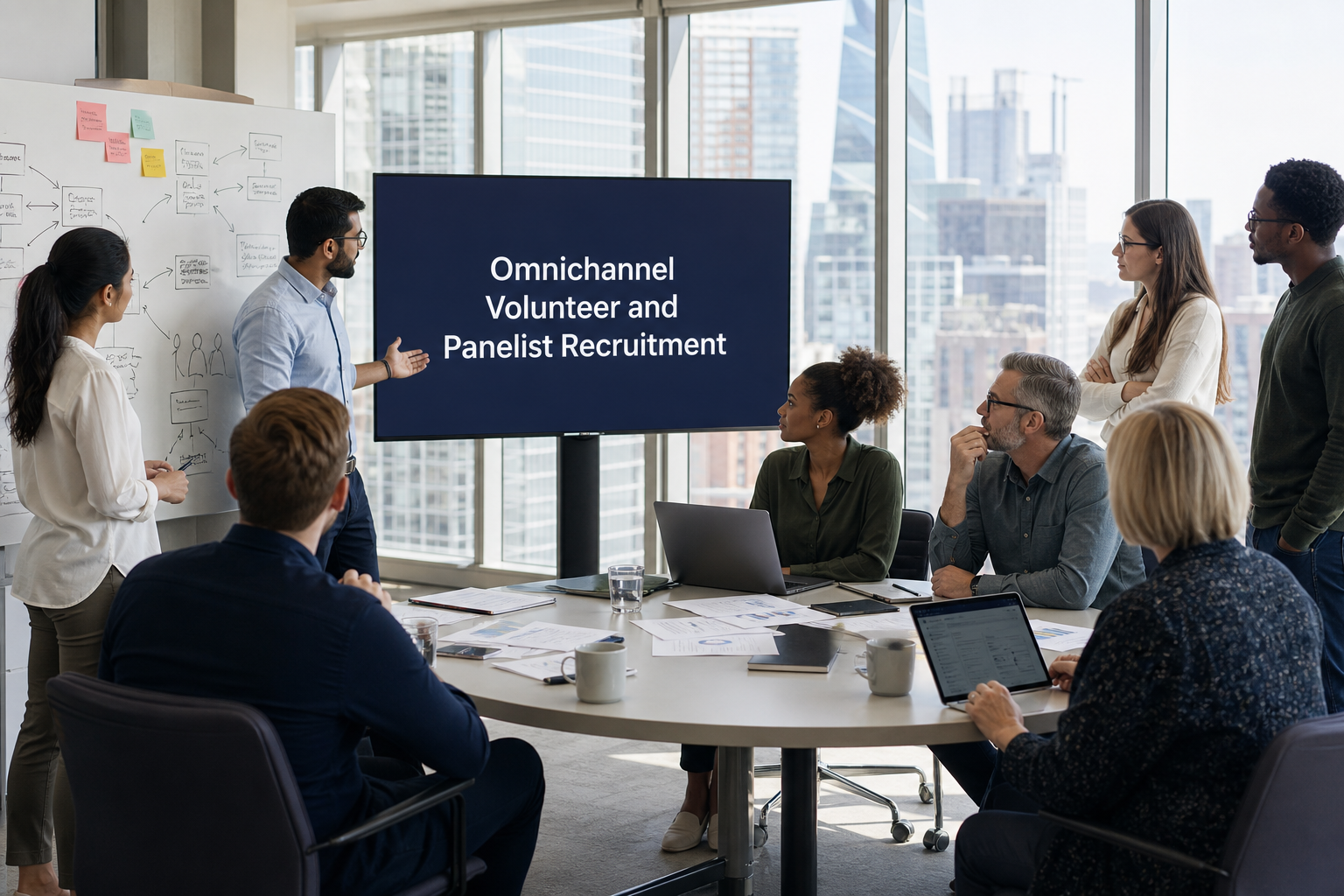
Ask any Phase 1 unit director what keeps them up at night and the answer rarely involves science. It involves beds. A clinical pharmacology unit is, economically speaking, a capacity business: cohorts must fill on schedule, screening slots cannot sit empty, and a single sentinel-dose dropout can idle an entire facility along with the staff scheduled around it. Ask a consumer research director at a cosmetics testing organization the same question and the vocabulary changes but the anxiety doesn't. Panels segmented by Fitzpatrick skin type, hair texture, age band, and product usage history must fill against launch dates that will not move, because the marketing campaign behind a claims-substantiation study was locked months ago.
Two very different industries, one identical bottleneck: recruitment. And in both, the bottleneck persists not because volunteers and panelists are scarce, but because the operating model used to reach them is decades old. Recruiters dial through call lists by hand. Reminders go out when someone remembers. Contact databases decay quietly in the background. Communication happens across personal mobile phones, shared inboxes, and standalone telephony systems that never talk to the database where volunteer records actually live.
Cloudbyz has taken a fundamentally different approach. By natively integrating Amazon Connect, the AI-powered cloud contact center from AWS, and Twilio, the world's leading programmable communications platform, directly into the Cloudbyz Patient Recruitment solution, the company has collapsed recruitment data and recruitment communications into a single Salesforce-native system. The result is an omnichannel recruitment engine that is already being applied to healthy volunteer recruitment for Phase 1 clinical trials at life sciences companies and to panelist recruitment for cosmetics and consumer studies.
This article looks at why recruitment breaks under the traditional model, how the integrated solution works, and what it changes for the organizations running these studies.
Why Recruitment Breaks: The Anatomy of a Fragmented Funnel
The recruitment funnel looks simple on a slide: generate leads, contact them, pre-screen, schedule, screen, enroll. In practice, each arrow between those stages is a place where prospects leak out, and the leakage is overwhelmingly driven by communication failure rather than eligibility failure.
Consider what happens in a typical database-driven Phase 1 campaign run the traditional way. A new protocol arrives and coordinators pull a list from the volunteer database. Recruiters begin calling. A large share of calls go unanswered because people don't pick up unknown numbers during working hours. Of those reached, many turn out to be ineligible for reasons a two-minute automated pre-screen would have caught, which means recruiter time was spent disqualifying rather than converting. Interested candidates are scheduled by phone, and then nothing happens for ten days until the screening visit, during which interest cools, life intervenes, and a meaningful percentage simply don't show up. Every no-show is a wasted slot, a wasted phlebotomist, and another day added to cohort fill.
Consumer panel recruitment fails in a parallel way at higher volume. Outreach to hundreds or thousands of panelists by phone is economically impossible, so organizations fall back on email blasts that go unread, while the channels these populations actually respond to, SMS and WhatsApp, remain disconnected from the panel database. Quota management across demographic segments is done in spreadsheets, washout rules are enforced from memory, and consent and opt-out tracking, the legal foundation of any consumer outreach under TCPA and GDPR, lives in yet another silo.
The common root cause is architectural. When the system that holds volunteer data is separate from the systems that communicate with volunteers, automation is impossible, context dies between touchpoints, and nobody can see the funnel in real time. Adding another communication tool to that landscape makes it worse, not better. The fix is unification.
The Solution: Communications Embedded in the System of Record
Cloudbyz Patient Recruitment manages the full recruitment lifecycle on the Salesforce platform: multi-source lead capture, volunteer and panelist database management, protocol-specific pre-screening, campaign management, scheduling, and enrollment handoff into the Cloudbyz CTMS and EDC. The Amazon Connect and Twilio integrations extend that foundation into a complete engagement layer, so every conversation is orchestrated from, and written back to, the same record the recruiter is working.
Amazon Connect supplies the contact center backbone. Recruiters receive and place calls through a softphone embedded directly in the Cloudbyz recruitment console. An inbound call from a volunteer triggers an automatic screen-pop of their record, complete with prior contact history, pre-screening status, and the studies they may qualify for. Interactive voice response flows handle first-line pre-qualification without any human involvement: a caller responding to a study advertisement is greeted, walked through protocol-configured knockout questions covering criteria like age range, BMI band, smoking status, and medication use, and either courteously disqualified with an invitation to join the database, or qualified and routed to a live recruiter or an instant scheduling link. Skills-based routing, call recording, real-time supervisor dashboards, and Contact Lens conversational analytics round out the picture, with every call, disposition, and recording reference logged automatically against the contact and the study.
Twilio supplies programmable reach. Campaigns defined in Cloudbyz trigger two-way SMS, WhatsApp Business messages, automated voice notifications, and email sequences at any scale. A recruitment campaign for a new protocol can activate a filtered database segment in minutes rather than weeks of dialing. Appointment confirmations go out with one-tap confirm or reschedule responses. Reminder cadences run automatically in the days before a screening visit, escalating from SMS to automated voice to a live recruiter task only when earlier touches go unanswered. Inbound replies are parsed, matched to the volunteer record, and either handled by automated flows or routed to a human depending on intent.
Because both platforms write into one Salesforce data model, every volunteer and panelist carries a single chronological engagement timeline across all channels. Consent status, channel preferences, IVR outcomes, message delivery receipts, call recordings, and scheduling history live on one record, visible to recruiters, supervisors, and dashboards in real time.
A Day in the Life of the Integrated Funnel
The difference is easiest to see by following two journeys.
A prospective Phase 1 volunteer sees a digital ad for a healthy volunteer study and calls the number. An Amazon Connect IVR flow answers immediately, at 9 p.m., long after the recruitment office has closed. In under three minutes the caller has answered the knockout questions, qualified provisionally, and received a Twilio SMS with a link to book a screening slot against real unit capacity managed in Cloudbyz. The volunteer books for the following Tuesday. Over the intervening days the system sends a confirmation, a reminder with directions and fasting instructions, and a day-before confirm-or-reschedule prompt. The volunteer taps confirm. On Tuesday they show up, and the recruiter who greets them has never manually entered a single data point: the record, the pre-screen responses, the consent to contact, and the full message history were captured automatically.
Meanwhile, a cosmetics testing organization needs a 200-person panel split across four skin-type segments for a moisturizer efficacy study starting in three weeks. The study team defines the quotas in Cloudbyz, the system filters the panelist database against the segment criteria and washout rules, and a Twilio WhatsApp campaign invites eligible panelists with a link to a mobile qualification survey. Segment fill is tracked live; one segment fills within 48 hours and closes automatically, while an under-subscribed segment triggers a second outreach wave and, ultimately, a short Amazon Connect outbound calling list for a recruiter to work. Confirmations, day-of instructions, and post-study thank-you and incentive messages complete the journey, and every panelist's participation history is updated for future eligibility.
Neither journey required custom engineering. IVR scripts, pre-screening questionnaires, message templates, cadences, quiet hours, and language variants are all configured by study or panel administrators, which means new protocols launch in days.
What Changes: The Business Impact
The mechanisms above translate into measurable movement on the metrics that define recruitment economics.
Cycle time compresses because database activation becomes instantaneous. A filtered segment reached simultaneously by SMS and WhatsApp, with self-service scheduling attached, converts interest into booked appointments in hours instead of the weeks a manual dialing campaign consumes. Organizations modeling the integrated approach typically plan for thirty to fifty percent faster cohort fill on database-driven Phase 1 studies.
Reach multiplies because the solution meets people on the channels they answer. Messaging-first outreach with voice escalation routinely achieves two to four times the contact and response rates of voice-only operations, and after-hours IVR captures the advertisement responders who previously reached voicemail and never called back.
No-shows fall because reminders become systematic. Multi-touch confirm-or-reschedule sequences reliably cut screening no-show rates by a quarter to forty percent, and automated backfill offers to waitlisted candidates mean that even cancellations rarely leave a slot empty.
Recruiter productivity climbs because automation absorbs the repetitive majority of outreach. When reminders, follow-ups, and first-line qualification run themselves, and when screen-pop and auto-logging eliminate data entry, the same recruitment team supports substantially more concurrent studies, with manual effort per enrollment typically falling forty to sixty percent.
Cost per enrollment drops through the combination of channel economics and conversion gains, and media spend gets smarter because source-to-enrollment attribution finally exists: when every lead is tracked from first touch to randomization in one system, budget flows to the channels that enroll rather than the channels that merely generate clicks.
Compliance as a Feature, Not a Burden
Recruitment communications sit at a demanding regulatory intersection: health data privacy under HIPAA, electronic records expectations under 21 CFR Part 11, European data protection under GDPR, and consumer outreach law under TCPA. The traditional fragmented model makes compliance a reconstruction exercise, assembling communication histories from phone bills, inboxes, and memory when an auditor asks.
The integrated model inverts this. Consent is captured with timestamped provenance before outreach begins. Opt-outs and STOP replies are honored instantly across every channel. Quiet hours and frequency caps are enforced centrally. Call recordings, message logs, and IVR interactions form a complete, tamper-evident audit trail retrievable per volunteer, per study, and per campaign. And the underlying platforms, Salesforce, AWS, and Twilio, bring the compliance certifications and HIPAA-eligible configurations that legal and IT teams expect. For Phase 1 units, a demonstrable communication control framework has become a genuine differentiator in sponsor audits and bid defenses.
Why the Salesforce-Native Architecture Matters
Plenty of vendors will sell a contact center, and plenty will sell a recruitment database. The structural difference in the Cloudbyz approach is that there is no seam between them, and no seam between recruitment and everything that follows it. Because Cloudbyz Patient Recruitment shares a platform with the Cloudbyz CTMS, CTFM, eTMF, EDC, and Safety & Pharmacovigilance solutions, an enrolled volunteer flows into study conduct without interfaces, transcription, or reconciliation, and study data flows back to sharpen recruitment intelligence.
The architecture is also what makes the AI roadmap credible. Every interaction captured as structured data on Salesforce becomes the substrate for the Cloudbyz Agentforce AI agent portfolio: conversational agents that handle routine volunteer inquiries and pre-qualification dialogues autonomously, scheduling agents that negotiate appointment times over SMS, and predictive models that score which database members are most likely to enroll and complete. Organizations adopting the omnichannel foundation today are positioning themselves for agentic recruitment without a future re-platforming project.
The Bottom Line
Recruitment has been treated for too long as a people problem to be solved with more calling hours. It is an infrastructure problem, and it yields to infrastructure. By embedding Amazon Connect's contact center intelligence and Twilio's global messaging reach inside a Salesforce-native recruitment system of record, Cloudbyz has turned volunteer and panelist recruitment from the least predictable stage of a study into a measurable, automatable, continuously improving operation, whether the study is a first-in-human trial at a clinical pharmacology unit or a 500-person sensory panel for a consumer brand.
For Phase 1 units, that means fuller cohorts, protected bed utilization, and audit-ready communication records. For cosmetics and consumer research organizations, it means faster panel fill, precise quota management, and outreach economics that scale. For both, it means recruitment finally operates with the same rigor as everything downstream of it.
Ready to see it on your own protocol or panel specification? Contact the Cloudbyz team to schedule a discovery workshop and a live demonstration of omnichannel recruitment configured around your actual study requirements.
Cloudbyz delivers a unified, Salesforce-native eClinical suite spanning Patient Recruitment, CTMS, CTFM, eTMF, EDC, and Safety & Pharmacovigilance, augmented by a growing portfolio of Agentforce-powered AI agents for clinical research and pharmacovigilance.
Subscribe to our Newsletter
