

Request a demo specialized to your need.
Every Payment Starts With a Visit. Can You Prove It?
A site submits an invoice for 14 subject visits. Finance approves it. The payment posts. Six months later, a Sunshine Act filing is due and the compliance team needs to trace each payment back to the visit that triggered it, the investigator who conducted it, the protocol it belongs to, and the indication it supports.
On most stacks, that trace doesn't exist. The visit is in CTMS. The payment is in ERP. The investigator classification is in a spreadsheet. The Sunshine-reportable flag was never applied because nobody configured it at the point the payment was generated.
Reverse-engineering a year of payments into a defensible Open Payments submission takes weeks. Every manual reconstruction introduces variance. Every variance is visible on the CMS Open Payments public database to auditors, journalists, and competitors. The problem isn't the compliance team. It's that the payment was never connected to the visit that earned it.
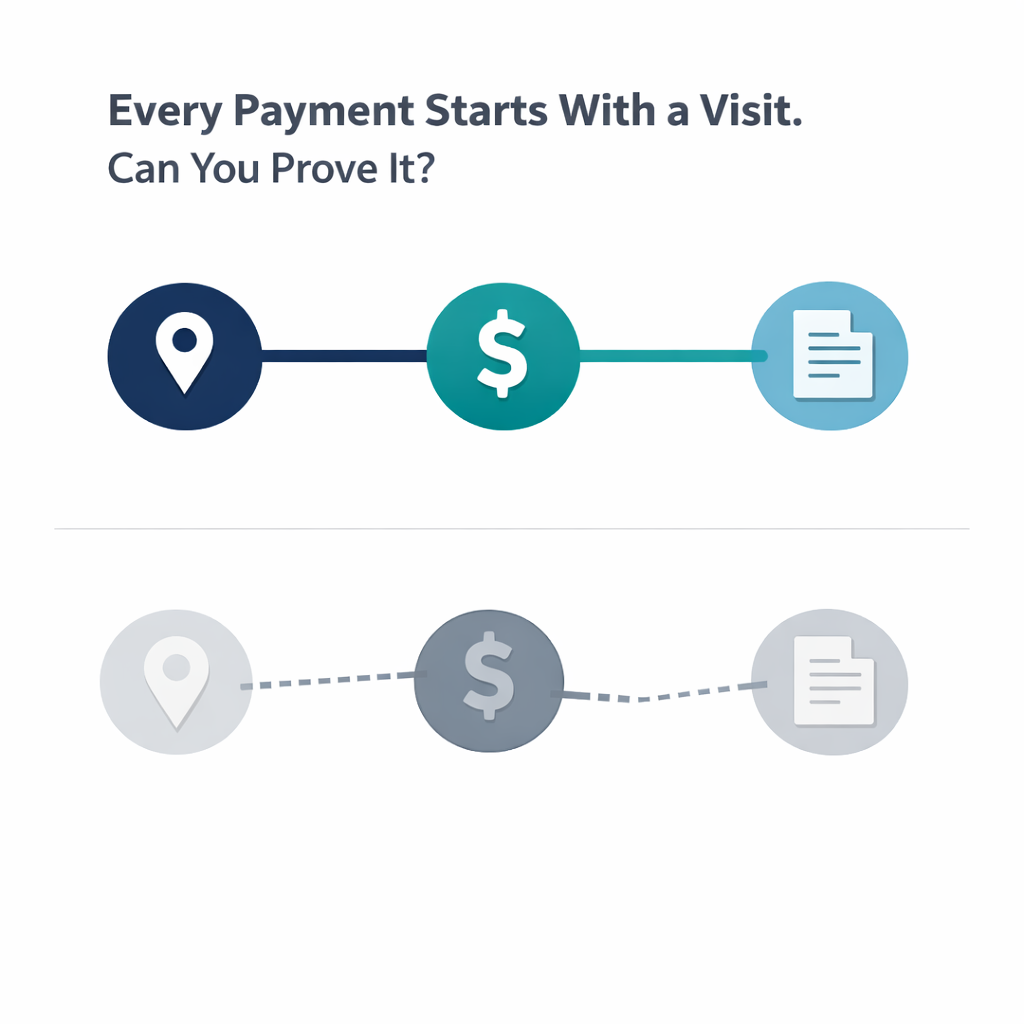
What changes when every payment traces to a CTMS event
When CTMS and Clinical Trial Financial Management run on one Salesforce-native platform, every payment originates from an operational event a completed visit, a passed milestone, a site activation, a closeout task. The financial transaction and the clinical event share the same record.
| Financial workflow | On disconnected systems | On unified CTMS + CTFM |
|---|---|---|
| Site payment trigger | Invoice arrives. Finance cross-references CTMS exports to verify. Manual approval. | Visit completed in CTMS triggers payable in CTFM automatically based on contract terms attached to the same site record. |
| Accrual calculation | Percentage-of-completion estimate rebuilt quarterly from stale CTMS data. | Accrual traces directly to verified visits and milestones defensible, drillable, auditor-ready. |
| Payment dispute resolution | CRA checks CTMS. Finance checks ERP. Contract terms checked in a third location. Takes days. | PM and finance look at the same record visits recognized, contract terms applied, payment status visible. Minutes, not days. |
| Sunshine Act classification | Applied retrospectively at year-end. Compliance reconstructs from invoices, emails, and spreadsheets. | Sunshine-reportable flag configured at contract setup. Applied automatically as CTFM generates payments from CTMS events. Metadata captured once, reused for filing. |
| Audit trail | Payment-to-visit trace requires manual reconstruction across 3+ systems. | One drilldown from payment to CTFM rule to CTMS event to site record. Single audit trail. |
Sunshine Act stops being a year end fire drill
The US Physician Payments Sunshine Act requires sponsors to report transfers of value to physicians and teaching hospitals payment amount, nature, related drug or device, recipient role, geography. The CMS Open Payments database makes every filing public.
When payment data originates from CTMS-driven events with metadata already attached investigator role, site type, country, protocol, indication the Sunshine dataset assembles itself continuously throughout the year. Contracts flagged for Sunshine relevance at configuration automatically tag every downstream payment. The annual filing becomes a review exercise, not a data archaeology project.
For EU transparency regimes, the same architecture applies. Transfers of value captured at the point of payment not reconstructed from invoices produce cleaner, more defensible filings with dramatically less manual effort.
Why this matters under ICH E6(R3)
ICH E6(R3), effective in the EU since 23 July 2025, holds sponsors accountable for data origination, transformation, and transcription across all systems. Section 4.2.3 makes audit trail review a planned, documented activity.
When CTMS and CTFM share one Salesforce-native audit trail, that accountability extends naturally to financial workflows. Every budget amendment, rate card update, manual accrual adjustment, and payment override is captured on the same objects that store CTMS events. The inspector who asks "show me how this payment connects to a clinical event" gets a one-click answer not a three-week reconciliation project.
Stop reconstructing. Start tracing.
Book a 30-minute working session with a Cloudbyz Clinical Solutions lead.
Subscribe to our Newsletter
