

Request a demo specialized to your need.
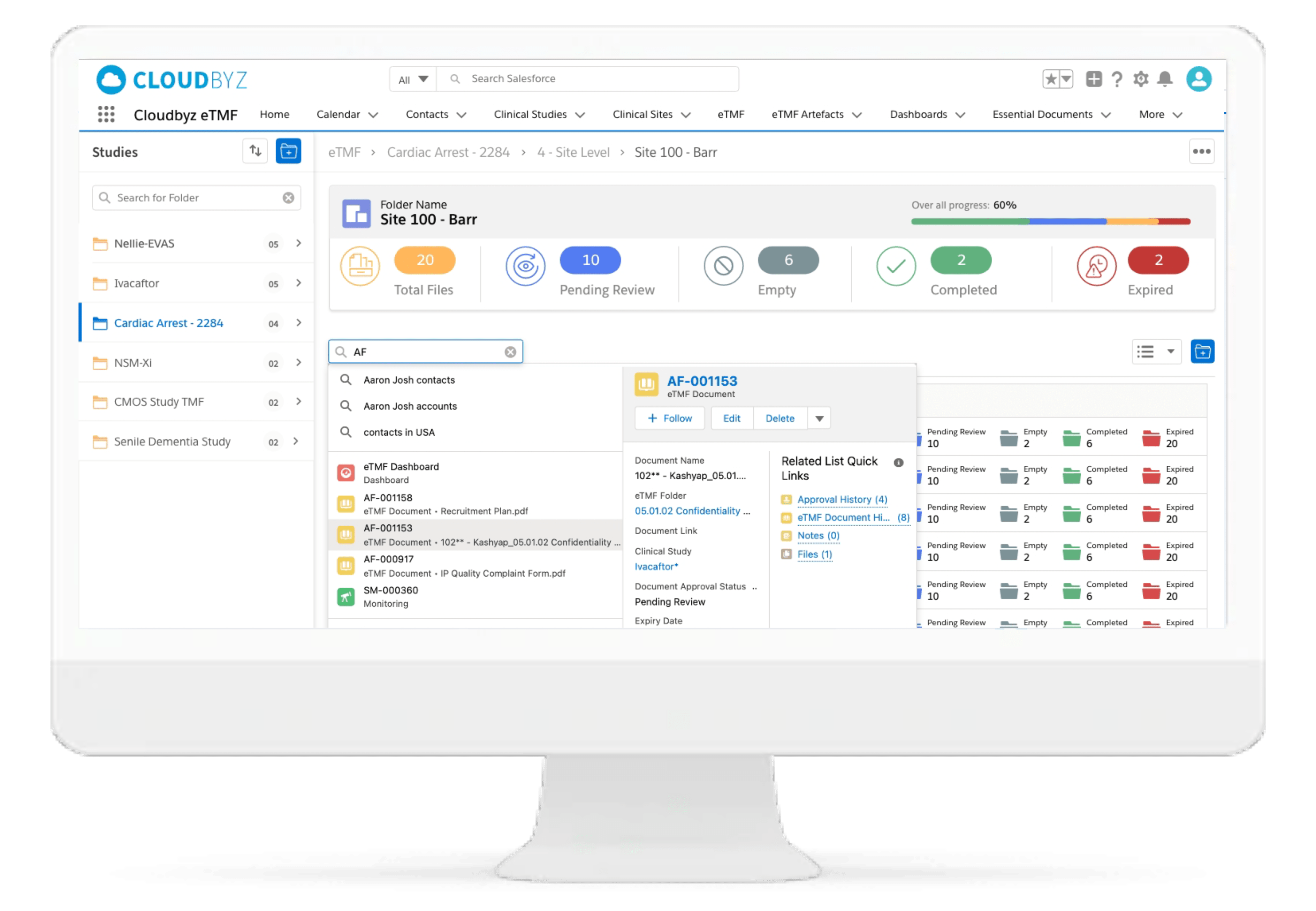
The electronic trial master file has become the single most scrutinized asset in a clinical trial. Here is how clinical operations leaders can turn documentation chaos into centralized control, compliance ready workflows, and faster collaboration across global teams.
Ask a clinical operations leader what keeps them awake before a regulatory inspection, and the answer is rarely the science. It is the documents. The electronic trial master file is supposed to tell the complete story of how a trial was conducted, yet in too many organizations that story is scattered across shared drives, email threads, local site binders, and a patchwork of disconnected tools. When an inspector arrives, teams do not retrieve the record. They reconstruct it.
That reconstruction is the hidden tax of modern clinical research. It consumes weeks of senior time, introduces avoidable risk, and slows every downstream decision. As trials grow more global, more decentralized, and more heavily outsourced, the volume of clinical documentation expands while the tools meant to manage it fall further behind. The result is a familiar and expensive pattern: trial documentation chaos.
This article makes the case that document control is no longer a back office function. It is a strategic capability, and the electronic trial master file is where that capability lives or dies. We will look at why the old approaches break down, what modern regulation now expects, and how a cloud based, unified eTMF changes the economics of running global trials.
01 The anatomy of trial documentation chaos
A single global study can generate tens of thousands of documents. Protocols and amendments, ethics approvals, investigator agreements, training records, monitoring reports, safety notifications, delegation logs, and vendor qualifications all accumulate across dozens of sites in multiple countries and languages. Each document has a lifecycle: draft, review, approval, signature, filing, and version control. Multiply that lifecycle by the number of participants in a trial and the scale of the challenge becomes clear.
The problem is rarely a shortage of effort. Teams work hard to keep records current. The problem is structural. When clinical documentation is spread across systems that do not talk to each other, four failures repeat themselves:
- No single source of truth. The same document exists in three places with three different version numbers, and no one is certain which one is final.
- No real time visibility into completeness. Leaders cannot answer a simple question, is this study inspection ready today, without a manual audit.
- Filing that lags conduct. Documents are collected during the trial and filed in a rush at the end, which is precisely when errors and gaps surface.
- Fragile sponsor and CRO oversight. When a contract research organization holds the record in a separate system, the sponsor loses the direct line of sight that regulators increasingly expect.
None of these failures is dramatic on its own. Together they compound into an environment where the trial master file becomes a liability rather than an asset. And the cost is not only inspection risk. Fragmented clinical documentation slows study startup, delays database lock, and makes every handoff between functions slower than it needs to be.
When the record of a trial has to be reconstructed rather than retrieved, the organization is already exposed.
02 Why the regulatory bar has risen
Expectations for the electronic trial master file have changed. The modernized ICH E6(R3) guideline reframes good clinical practice around quality by design and risk based thinking, and it treats the trial master file as an active enabler of trial oversight rather than a passive archive. The guiding principle is direct: the records held in the TMF should allow the conduct of the trial to be reconstructed and evaluated at any point, not only at closeout.
That principle carries practical consequences for clinical trial management. Real time filing moves from a nice to have to an expectation. Documents are meant to be filed contemporaneously, so that completeness reflects the actual state of the trial rather than an end of study catch up. Sponsors are expected to maintain oversight of activities they delegate, which means the record cannot disappear into a partner's disconnected system. And every action on a controlled document needs a defensible audit trail.
Layer on 21 CFR Part 11 and equivalent expectations for electronic records and electronic signatures, and the requirements for eTMF systems become concrete. A modern electronic trial master file has to enforce controlled access, capture a complete and attributable audit trail, support compliant electronic signatures, and demonstrate completeness against a recognized structure such as the DIA TMF Reference Model. Spreadsheets and shared folders were never designed to meet this bar, and stretching them to try is where much of the risk originates.
03 Why legacy and standalone approaches fall short
Organizations respond to documentation chaos in predictable stages, and most stall before reaching real control.
|
THE TRAP Shared drives and paper. Cheap and familiar, but no audit trail, no version discipline, and no way to prove completeness. Inspection readiness is a manual project every time. |
|
THE TRAP Standalone eTMF systems. Purpose built for documents, yet siloed from the systems running the trial. Teams re-enter data, reconcile metadata by hand, and manage integrations that break. |
|
THE TRAP Off platform point tools. A separate application for the trial master file means separate logins, separate reports, and limited automation or AI to reduce the manual burden. |
|
THE SHIFT A unified eClinical platform. When the eTMF shares a foundation with CTMS, EDC, and safety, metadata flows automatically, oversight is native, and completeness is visible in real time. |
The core issue with even a well built standalone eTMF is that it treats document control as an island. A trial master file does not exist in isolation. Its documents are generated by activities that live in clinical trial management, data capture, and safety. When those systems are disconnected, the eTMF becomes a downstream copy that is always a step behind reality, and keeping it accurate turns into perpetual reconciliation work. The technology promised to remove manual effort and instead relocated it.
04 What global trial document control actually requires
Before evaluating any solution, clinical operations leaders should be clear about what genuine control looks like. Three capabilities separate a compliant, efficient electronic trial master file from a digital filing cabinet.
Centralized control
One authoritative record for the entire trial, structured to a recognized reference model, with a live view of completeness by study, country, site, and document type. Control means a leader can answer the inspection readiness question in seconds, not weeks, and can trust that what they see is current.
Compliance ready workflows
Compliance should be built into how work happens, not bolted on afterward. That means configurable review and approval workflows, controlled access by role, a complete and attributable audit trail, and compliant electronic signatures for every controlled document, all aligned to ICH E6(R3) and 21 CFR Part 11 expectations.
Faster collaboration across global teams
Sponsors, CROs, and sites need to work in the same record at the same time, across time zones and languages, with the right permissions and without emailing documents back and forth. Collaboration in place, rather than collaboration by attachment, is what keeps filing contemporaneous and oversight intact.
05 How Cloudbyz eTMF delivers
Cloudbyz eTMF is a cloud based electronic trial master file built on the Salesforce platform as part of a unified eClinical suite. That architecture is the point. Rather than adding another disconnected system to the clinical technology stack, Cloudbyz brings the trial master file into the same environment as clinical trial management, data capture, and safety, so the record and the work that produces it live together.
|
What that unlocks for clinical operations A single source of truth Every trial document is managed in one structured, DIA TMF Reference Model aligned record, with real time completeness dashboards by study, country, and site. Inspection readiness becomes a live status, not a fire drill. Compliance engineered in Controlled access, full audit trails, configurable approval workflows, and 21 CFR Part 11 compliant electronic signatures through Cloudbyz eSign support ICH E6(R3) expectations without manual workarounds. Native sponsor and CRO oversight Sponsors retain direct visibility into records held by partners, with role based access that protects confidentiality while preserving the oversight regulators expect. Unified metadata, no reconciliation Because the eTMF shares a foundation with CTMS, EDC, and safety, study and site metadata flow automatically. Teams stop re-keying data and stop reconciling systems that disagree. AI that reduces the manual burden The Cloudbyz AI eTMF Agent assists with document classification, filing, and completeness and quality checks, so specialists spend less time on routine QC and more on exceptions that need judgment. |
The distinction from the alternatives is deliberate. Where a standalone eTMF asks teams to bridge the gap between documents and operations by hand, a unified platform closes that gap by design. And where off platform tools offer limited automation, an AI enabled eTMF built on a modern cloud platform actively removes routine work rather than simply digitizing it.
06 What good looks like
The payoff of moving from documentation chaos to centralized control shows up across the trial lifecycle, and it is measured in outcomes that clinical operations leaders already care about:
- Continuous inspection readiness. Completeness is visible every day, so audits and inspections become a report to run rather than a project to staff.
- Faster study startup. Structured workflows and automated filing shorten the document heavy startup phase and reduce the gaps that delay activation.
- Higher quality, lower risk. Contemporaneous filing and automated quality checks catch issues while they are still cheap to fix, not at closeout.
- Real oversight of outsourced work. Sponsors maintain a direct line of sight into records held by CROs and sites, meeting the expectation that delegation does not mean loss of control.
- Time returned to specialists. Less manual reconciliation and routine QC means experienced people spend their time where judgment matters.
None of this is about technology for its own sake. It is about giving clinical operations the ability to prove, at any moment, that a trial was conducted to standard, and to do so without diverting the team from the work that moves the study forward.
07 Frequently asked questions
What is an electronic trial master file?
An electronic trial master file, or eTMF, is the digital collection of essential documents that demonstrate a clinical trial was conducted in compliance with good clinical practice and applicable regulatory requirements. It captures the full record of trial conduct so that, at any point, the trial can be reconstructed and evaluated.
How is a unified eTMF different from a standalone eTMF system?
A standalone system manages documents in isolation from the tools that run the trial, which forces teams to re-enter data and reconcile metadata manually. A unified eTMF shares a foundation with clinical trial management, data capture, and safety, so metadata flows automatically and the record stays aligned with reality without extra work.
How does Cloudbyz eTMF support regulatory compliance?
Cloudbyz eTMF provides controlled role based access, a complete and attributable audit trail, configurable review and approval workflows, and 21 CFR Part 11 compliant electronic signatures. Its structure aligns to the DIA TMF Reference Model and supports the real time filing and oversight expectations of ICH E6(R3).
Can sponsors and CROs collaborate in the same system?
Yes. Sponsors, CROs, and sites can work in the same record with role based permissions that protect confidentiality while giving sponsors the direct oversight of delegated activities that regulators expect.
What role does AI play in the eTMF?
The Cloudbyz AI eTMF Agent assists with document classification, filing, and completeness and quality checks, reducing the routine manual effort of TMF management so specialists can focus on the exceptions that require judgment.
|
See inspection readiness as a live status Discover how a cloud based, unified electronic trial master file can end documentation chaos and give your global teams centralized control, compliance ready workflows, and faster collaboration. Request a Cloudbyz eTMF demo → |
Subscribe to our Newsletter
