

Request a demo specialized to your need.
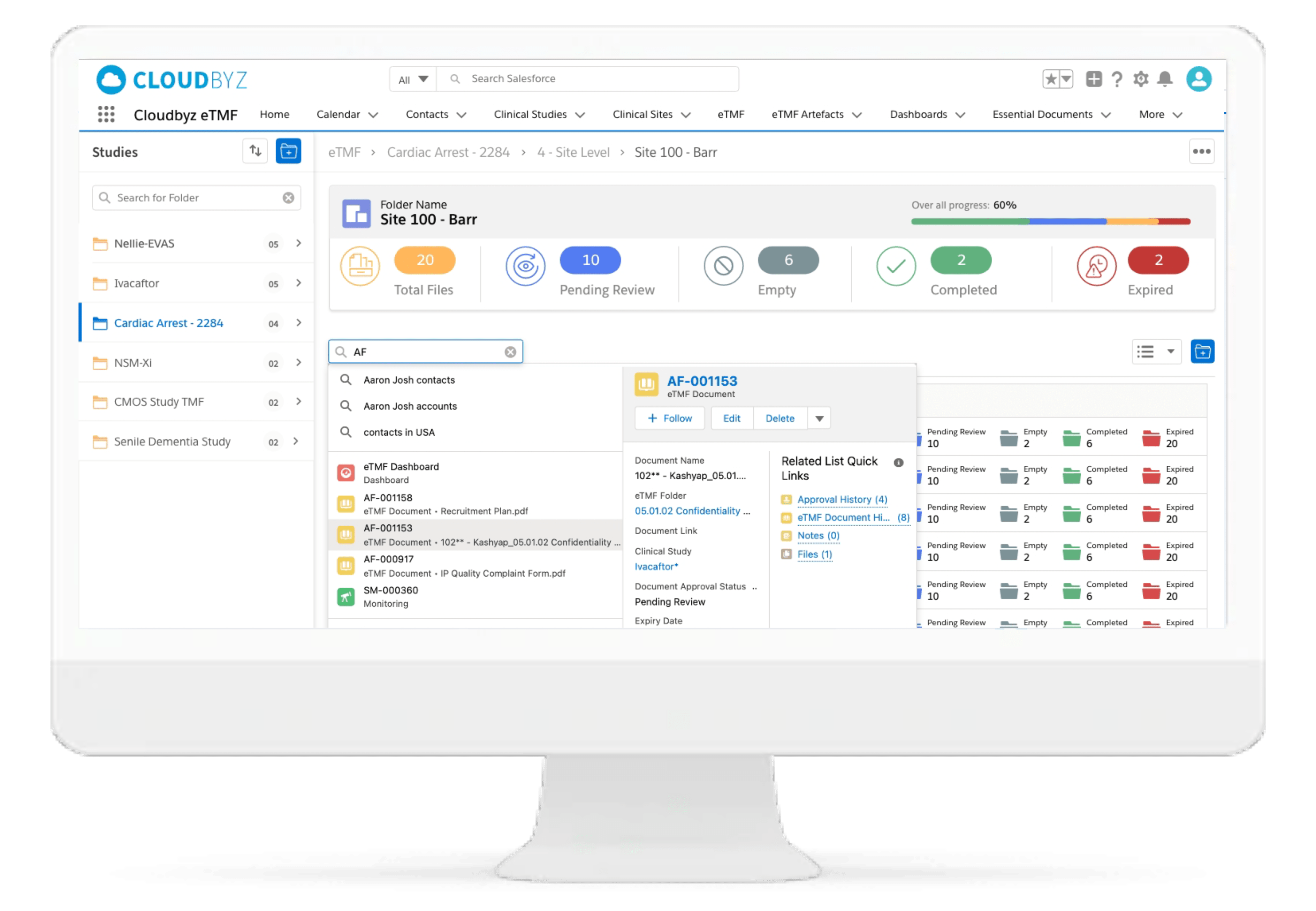
Practical AI patterns to govern placeholders, versions, and lineage in eTMF.
Turning Chronic TMF Gaps into Predictable, Inspection-Ready Outcomes
Executive Perspective: Why Placeholders and Versions Still Break eTMF Quality
For TMF leaders, QA heads, and clinical operations executives, placeholders and version control are among the most persistent sources of eTMF risk. They appear benign on dashboards, yet they are often the root cause behind inspection findings, last-minute remediation, and loss of confidence in TMF health metrics.
Despite years of investment in eTMF platforms, most organizations still manage placeholders and document versions through:
-
Static expectations tables
-
Manual follow-ups with sites and vendors
-
Email- and spreadsheet-driven version tracking
-
Periodic QC checks performed too late
The result is familiar to every eTMF buyer persona: placeholders that linger long past acceptable timelines, superseded documents that remain active, and inconsistent version logic that auditors quickly detect.
AI playbooks change this equation entirely. They move placeholder and version control from manual policing to intelligent, proactive orchestration—and, critically, they allow organizations to prove control rather than claim it.
The Hidden Risk of Placeholders in the eTMF
Placeholders are intended to be helpful—they signal expected artifacts and provide structure. In practice, they often become blind spots.
Common failure patterns include:
-
Placeholders created at study start-up but never revisited
-
Inability to distinguish “not yet applicable” from “overdue”
-
Lack of contextual awareness when upstream events are delayed
-
No prioritization based on inspection or quality risk
From a regulator’s perspective, unresolved or poorly managed placeholders raise an uncomfortable question:
Did the activity actually occur, and can you prove it?
Static rules cannot answer that question. AI-driven playbooks can.
Version Control: Where eTMF Trust Quietly Erodes
Version control issues are even more damaging because they undermine document integrity itself.
Typical problems include:
-
Multiple active versions without clear supersession logic
-
Final documents uploaded without prior drafts archived correctly
-
Incorrect “final” designations before signatures or approvals
-
Regional or vendor-specific versions misfiled under global artifacts
In inspections, these issues quickly escalate from clerical errors to questions about process control and data integrity.
Reframing the Problem: From Rules to Playbooks
Traditional eTMF systems rely on rules: expected documents, timelines, and version flags. Rules are static. Clinical trials are not.
AI playbooks introduce a higher-order concept:
Contextual, scenario-driven automation that adapts to how the trial is actually running.
A playbook is not just “what should happen,” but:
-
When it should happen
-
Why it matters
-
What risk it creates if it doesn’t
-
Who should act, and how urgently
This is the foundation of AI-driven placeholder and version governance.
AI Playbooks for eTMF Placeholders
Context-Aware Placeholder Intelligence
AI playbooks continuously evaluate placeholders against real trial signals:
-
Site activation and close-out status
-
Enrollment milestones
-
Monitoring visit completion
-
Country-level regulatory timelines
A placeholder is no longer simply “open” or “late.” It is contextualized as:
-
Not yet applicable
-
Expected but low risk
-
Overdue with escalating inspection risk
This eliminates noise and focuses teams on what truly matters.
Risk-Based Prioritization
AI assigns risk scores to placeholders based on:
-
Artifact criticality (inspection-critical vs operational)
-
Trial phase and proximity to inspection
-
Historical site or vendor performance
-
Dependency on upstream activities
TMF teams are guided to address the highest-risk gaps first, instead of chasing volume-based metrics.
Automated Escalation Playbooks
When thresholds are crossed, AI triggers predefined actions:
-
Targeted reminders to responsible parties
-
Escalation to TMF leads or QA
-
Suggested remediation steps based on past resolution patterns
Every action is logged, creating defensible evidence of proactive control.
AI Playbooks for Version Control
Intelligent Version Lineage Detection
AI analyzes document content—not just filenames or metadata—to determine:
-
Whether a document is a true revision or a new artifact
-
What changed between versions
-
Whether required approvals or signatures are present
This prevents duplicate “final” documents and enforces correct supersession logic.
Policy-Driven Version Enforcement
Different artifacts demand different rigor. AI playbooks enforce:
-
Draft → Final progression rules
-
Country-specific or submission-specific version requirements
-
Locking rules once documents reach final, approved state
This ensures consistency without slowing down operations.
Continuous Version Risk Monitoring
Instead of periodic checks, AI continuously scans the TMF for:
-
Active outdated versions
-
Inconsistent versioning across countries or sites
-
Deviations from SOP-defined version practices
Issues are detected early—before they appear in an inspection room.
How This Works in a Cloudbyz eTMF Environment
In a Cloudbyz eTMF context, AI playbooks operate natively within TMF workflows, not as external add-ons.
As documents are ingested, updated, or delayed, AI continuously evaluates:
-
Placeholder relevance and risk
-
Version correctness and lineage
-
Alignment with SOPs and RBQM principles
Human reviewers remain firmly in the loop—approving AI recommendations, resolving edge cases, and applying judgment where required. The system does the surveillance; humans make the decisions.
What This Means for the Cloudbyz eTMF Buyer Persona
TMF Leaders
-
Eliminate placeholder chaos without increasing headcount
-
Focus teams on risk, not raw volume
-
Maintain continuous TMF health, not periodic clean-ups
Quality & Inspection Readiness Teams
-
Defensible evidence of proactive TMF governance
-
Clear lineage of document evolution
-
Reduced inspection surprises and remediation cycles
Clinical Operations & Executives
-
Confidence that the TMF reflects real trial execution
-
Predictable inspection outcomes
-
Scalable quality as trial portfolios grow
Beyond Automation: Proving Control and Intent
The most important distinction for buyers: AI playbooks are not just automation tools. They encode organizational intent, SOPs, and risk tolerance directly into the eTMF.
When inspectors ask:
“How do you ensure placeholders and versions are controlled?”
The answer is no longer procedural—it is systemic, visible, and provable.
Conclusion: From Managing Documents to Governing Quality
Placeholders and version control have long been accepted pain points in eTMF operations. AI playbooks transform them into sources of confidence rather than concern.
For Cloudbyz eTMF buyers, this represents a decisive shift:
-
From reactive clean-up to proactive governance
-
From checklist compliance to quality assurance by design
-
From hoping the TMF is inspection-ready to knowing it is
AI playbooks for placeholders and version control are not incremental improvements. They are foundational capabilities for the next generation of eTMF—where quality is continuously demonstrated, intelligently managed, and inspection-ready by default.
Subscribe to our Newsletter
